Instant Quote
If you own a block of land anywhere between the Hawkesbury and the Royal National Park, you already know that Sydney trees have a personality. They shade your barbecue in January, drop half their canopy on your Colorbond roof in a February storm, and then, just to keep things interesting, decide the footpath is a lovely spot to lift with their roots. Sydney’s canopy is one of the best things about living here — right up until a branch the size of a surfboard lands on the trampoline.
That’s where a proper arborist Sydney homeowners can actually trust comes in. Not the bloke with a chainsaw and a ute who “does trees on the side,” but a genuine, qualified crew who understands species, structure, council rules and the very real physics of a 15-metre eucalypt deciding it’s done standing up. At Arborists NSW, that’s the whole job description, and this guide walks you through everything worth knowing before you make a single phone call.
Why Sydney’s Trees Need More than a Backyard Guess
Sydney sits in a strange sweet spot climate-wise — humid summers, wet microbursts, the odd east coast low that turns your garden into a wind tunnel, and soil that swings from sandy Hawkesbury loam to heavy clay depending which suburb you’re in. That combination is brilliant for growing big, beautiful, structurally unpredictable trees. It’s also why so many “simple” tree jobs go sideways when someone without training gets involved.
A qualified arborist isn’t just there to swing a chainsaw around. They’re assessing root plates, deadwood, co-dominant stems, decay pockets you can’t see from the ground, and whether that leans is “character” or “final warning.” If you’ve been putting off getting a tree looked at because it seems dramatic to call in a professional, it usually isn’t — it’s the difference between a $600 job today and an insurance claim after the next southerly buster. The full rundown of what the team actually covers, from health assessments to heavy removals, is all laid out on the Arborists NSW services page, which is worth a browse even if you’re just curious what “arboriculture” covers beyond the obvious.
Tree Removal: The Job Nobody Wants but Everybody Eventually Needs
Let’s start with the one that gets people nervous — tree removal Sydney wide is one of the most searched (and most botched-by-amateurs) jobs in the trade. Removal isn’t always about a dead or dying tree. Sometimes it’s a healthy tree that’s simply in the wrong spot now — too close to a new extension, lifting a driveway, or shading out the solar panels you just spent a small fortune on.
The tricky part is that no two removals are the same. A single small camphor laurel in an open backyard is a different beast entirely to a mature blue gum wedged between two fences with power lines running through the canopy. That second scenario needs rigging, sectional dismantling, sometimes a crane, and a crew who’ve actually done it before rather than learned on your dime. When it’s done properly — with the right gear, the right permits sorted, and a genuine understanding of load and lean — a huge job looks almost boring to watch, which is exactly how you want it. You can see how the crew approaches everything from a single stubborn stump to a full-canopy job on the tree removal and tree cutting page.
Pruning: The Difference between Tidy and Traumatised
Here’s an uncomfortable truth: most “tree lopping” you see around Sydney is bad for the tree. Hacking the top off a tree (topping, as it’s known) might look like a quick fix for height or shade, but it triggers weak, fast regrowth that’s actually more dangerous long-term, not less. Proper tree pruning Sydney arborists carry out follows the Australian Standard (AS 4373), which is basically the rulebook for cutting in a way that keeps the tree structurally sound instead of turning it into a green lollipop on a stick.
Good pruning does a few things a hacksaw job never will: it removes deadwood before it becomes a hazard, opens the canopy so wind passes through instead of catching it like a sail, clears your gutters and eaves, and actually extends the tree’s life. If your tree’s been looking a bit lopsided, blocking the view your neighbours definitely mention at every barbecue, or dropping branches that make the backyard feel like a minefield, the tree pruning and tree trimming service is where that gets sorted properly rather than guessed at with a ladder and a prayer.
Storms, Splits and 2am Phone Calls
Sydney doesn’t do subtle weather. When a storm cell rolls through the Blue Mountains and hits the basin, it can drop a branch through a roof in the time it takes to grab a towel and check the back door. This is where emergency tree services Sydney residents search for at the worst possible moment — tree down on the fence, branch resting on the power line, root plate half out of the ground after days of rain.
In a genuine emergency, the priorities are simple: make the site safe, get hazards away from people and property, and stabilise anything that’s still a risk before it becomes a bigger one. That’s not a job for “give it a go” — a compromised tree under tension can move violently the second a cut is made, and that’s before you factor in wet ground, live wires, or a branch balancing on your neighbour’s Hills Hoist. Having a number saved for exactly this situation, before the storm rather than during it, is one of those small bits of prep that pays off enormously. The emergency tree services page has the details on what a rapid-response callout actually looks like.
Stumps: The Uninvited Guest That Refuses To Leave
So the tree’s gone, but there’s a stubborn lump of timber sitting in the middle of the lawn like it owns the place. Stump grinding Sydney jobs are more common than people expect, mostly because homeowners assume “removal” automatically includes the stump — it often doesn’t, and grinding is genuinely its own trade.
A leftover stump isn’t just an eyesore. It’s a tripping hazard, a magnet for termites (never a word you want near your house), and it’ll keep sending up suckers for years if the roots are still alive underneath. Grinding chews the stump down below ground level so you can turf, plant or pave straight over the top, which is a much better weekend project than wrestling a shovel against a root system that’s had thirty years to dig in. Details on how deep the grinding goes and what’s left behind are on the stump grinding and stump removal page.
Mulch: Sydney’s Most Underrated Garden Upgrade
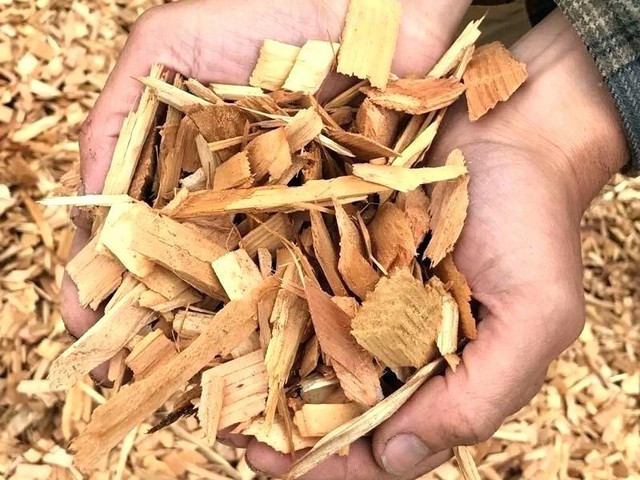
Here’s the bit most guides skip entirely, and it’s a shame, because it’s genuinely one of the smartest parts of the job. Everything that comes off your tree during a removal or a big prune doesn’t have to disappear in a truck — it can come back to your garden as mulch. Tree mulching Sydney services turn branches and offcuts into a free (or heavily discounted) load of garden mulch on the spot, which locks in soil moisture through our brutal summers, suppresses weeds, and slowly feeds the soil as it breaks down.
It’s a nice full-circle moment, honestly — the tree that shaded your yard for twenty years ends up protecting the garden bed it used to grow beside. If you’ve got garden beds crying out for a top-up, it’s worth asking about woodchipping before the job even starts, since it saves a separate trip to the landscape supplier. More on how it works is on the tree mulching and woodchipping page.
Land Clearing: For When the Whole Block Needs A Reset
Sometimes the job isn’t one tree, it’s the whole block. Whether you’re preparing a site for a granny flat, clearing an overgrown rear yard before a knockdown rebuild, or dealing with a property that’s had vegetation running wild for years, land clearing Sydney work needs a completely different level of planning — machinery access, waste management, erosion control, and usually a fair bit of coordination with builders or surveyors working to a deadline.
This is also where council rules get genuinely important, because land clearing at scale almost always intersects with development approvals, biodiversity offsets, or protected vegetation zones depending on your LGA. Getting this wrong doesn’t just cost money, it can hold up an entire build. The land clearing and site preparation service covers how a job like this gets scoped properly from the start, rather than turning into a headache halfway through.
A Quick Word on Council Rules (Because Sydney Loves Paperwork)
Nearly every one of Sydney’s 33-odd local government areas has its own Tree Preservation Order or Development Control Plan provisions, and they genuinely don’t all agree with each other. A tree that’s exempt in one LGA might need a full development application two suburbs over. Generally, councils look closely at trunk diameter, height, canopy spread, and whether a species sits on a significant or heritage register — but thresholds shift from council to council, and getting it wrong can mean fines that make the removal job look cheap by comparison.
The safest approach is always the same: get a qualified arborist to check what applies to your specific address before work starts, especially for anything beyond a straightforward prune. It’s a five-minute conversation that saves a very expensive letter from council later.
Suburbs Covered (Basically, All of Them)
Whether you’re in the Inner West wrangling a heritage-zoned fig, out on the Northern Beaches dealing with salt-stressed banksias, or in the Hills District trying to tame a paddock that’s reverted to bush, the crew works right across the greater Sydney footprint. You can check exact coverage on the areas serviced page, and if you want to see the standard of finish rather than take it on faith, the portfolio of completed jobs is worth a scroll — nothing sells tree work quite like a before-and-after photo of a driveway that used to be blocked by a fallen limb.
Getting A Quote Without The Runaround
None of this needs to be complicated. A quick photo, a description of the job, and a rough idea of access (tight side gate versus wide-open backyard makes a real difference to pricing) is usually enough to get the ball rolling. From there it’s a site visit, a clear quote, and a booking — no vague “we’ll call you back” limbo. Get in touch through the contact page and you’ll actually get a straight answer, which, let’s be honest, shouldn’t be a selling point in 2026 but somehow still is in this industry.
Frequently Asked Questions
Do I need council approval before removing a tree on my property in Sydney? Often, yes — but it depends entirely on your council, the tree’s height, trunk diameter, and whether it’s listed as significant or heritage. Some councils exempt certain fast-growing or weed species outright; others require a full application even for a modest backyard tree. A qualified arborist can usually tell you within minutes whether your situation needs a permit, which saves you from either an unnecessary application or an unwanted fine.
How much canopy can be safely removed in a single prune? As a general rule under the Australian Standard for pruning, you shouldn’t remove more than about 25–30% of a tree’s live canopy in one goes, and healthy, mature trees generally cope better with a lighter, more frequent prune than one aggressive cutback. Removing too much at once stresses the tree, encourages weak regrowth, and can leave it more vulnerable to pests and decay rather than less.
Is emergency tree work more expensive than a scheduled job? Usually a little, yes, simply because it involves after-hours callouts, higher risk conditions (wet ground, damaged structures, live power lines) and rapid mobilisation of equipment. That said, a genuine emergency crew will always prioritise safety over selling extras, and the cost is almost always smaller than the damage a compromised tree could cause if left overnight.
What actually happens to the wood after a tree removal? It depends what you want. Larger trunk sections are sometimes kept for milling or firewood if requested, smaller branches and offcuts are typically chipped into mulch on-site, and everything else is removed and disposed of responsibly. If you’ve got garden beds that could use a refresh, it’s worth asking upfront — recycling the timber back into your own yard is often cheaper than buying mulch separately later.
How do I know if a tree is actually dangerous or just looks a bit rough? Some warning signs are fairly reliable even for a non-expert: a sudden lean that wasn’t there before, large dead branches (deadwood) in the upper canopy, fungal growth at the base or on the trunk, cracks running along major limbs, or roots that have visibly lifted the surrounding ground. None of these guarantee an emergency, but any of them are worth a professional assessment rather than a guess from the back deck.
Can stump grinding damage nearby pipes, cables or paving? It’s a fair concern, since grinding does go below ground level. A good crew will ask about underground services beforehand and adjust grinding depth and technique around known utilities, garden edging, or paving. If you’re aware of pipework or cabling near the stump, mentioning it at quote stage avoids any surprises on the day.
Is it cheaper to do land clearing myself before a builder arrives? Rarely, once you factor in council compliance, correct disposal, and the risk of damaging retained vegetation you were meant to keep. Builders and certifiers often require documentation showing clearing was done in line with approval conditions — DIY clearing without that paper trail can actually delay a build rather than speed it up.
Trees are one of those things Sydney homeowners tend to ignore until they’re not ignorable anymore. A bit of proactive care — the odd prune, an honest look at anything leaning or hollow, and a professional call when a job is bigger than a Saturday afternoon — keeps your property, your neighbours, and your insurance premium a lot happier. And when the job does need a genuine expert, Arborists NSW is the crew built for exactly that.