
Instant Quote
Picture a mate’s backyard in Sydney. There’s a big old eucalypt, a shed on one side, a fibro fence on the other and a carport that’s only just survived the last storm. Somebody needs to take a heavy limb off that tree, and “just let it fall” isn’t going to cut it. A branch that looks like it weighs about as much as a fridge can easily weigh more, and gravity doesn’t care about your carport.
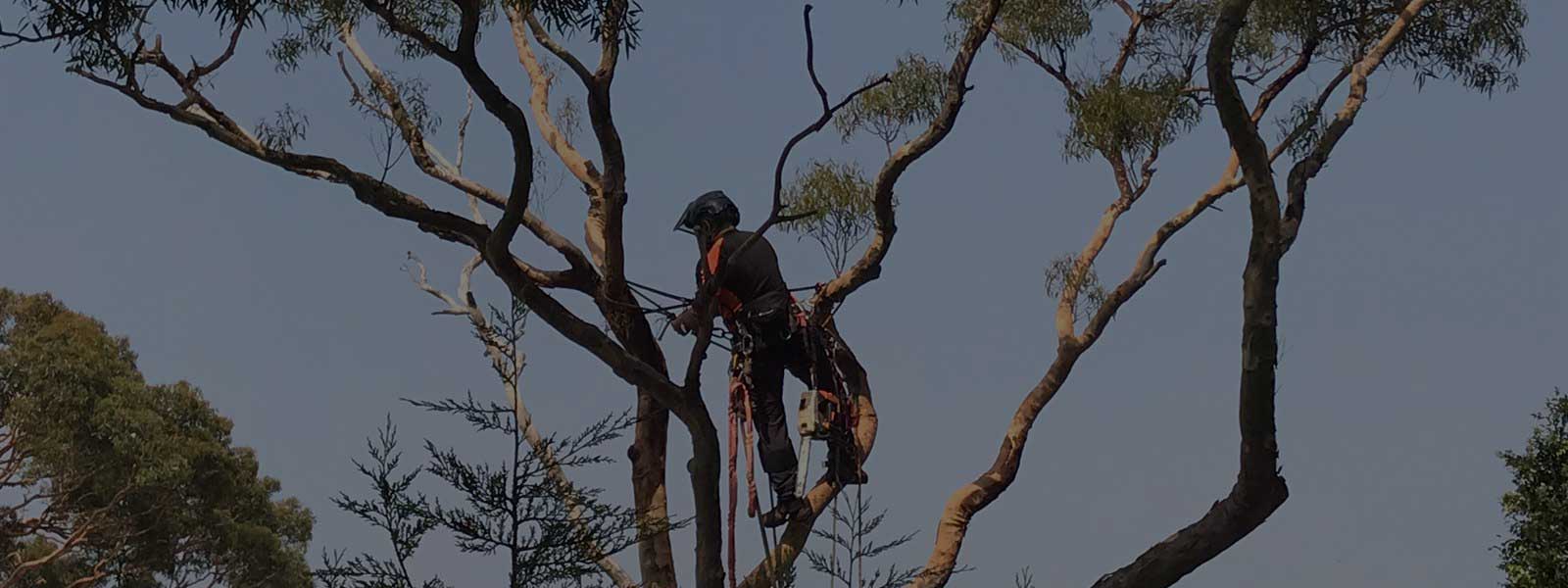
That’s where ropes and rigging come in. At Arborists NSW, controlling a falling branch isn’t a nice bit of showmanship. It’s the core skill behind safe, tidy work in any tight Sydney yard. This guide walks through how professional tree care experts in Sydney plan, rig and lower a branch so it lands exactly where it should, and why a good crew can make a very big cut look boringly uneventful (which is the goal).
Why a Falling Branch Is Never “Just a Branch”
Green timber is heavy. A limb full of leaf and sap can weigh hundreds of kilos, and the moment you cut it, all that mass wants to swing, drop and rip through whatever’s below. Even a modest-sized limb picks up serious force once it falls a short distance and the rope suddenly goes tight. Researchers who study lowering loads in tree work call it one of the riskiest jobs a climber does, because the forces land on the very tree the climber is standing in.
Add Sydney’s reality into the mix: powerlines, pool fences, neighbouring roofs, solar panels, lovingly maintained veggie patches and a block that’s barely wider than a tennis court. Rigging is how arborists turn a dangerous drop into a slow, controlled lowering. If you’re comparing tree removal Sydney options, ask how the crew handles falling timber. The answer tells you a lot.
Step One: Reading the Tree Before Anyone Touches a Saw
Good rigging starts on the ground, usually with a cuppa and a good, hard look up. Before a climber leaves the ground, a qualified arborist is checking:
- The lean and the load. Which way does the limb want to go once it’s free?
- Defects. Cavities, cracks, dead wood or fungal rot can turn a “solid” anchor point into a very bad surprise.
- What’s underneath. Roofs, cars, services, garden beds and people.
- The drop zone. The area where wood is allowed to land, and nobody else is allowed to stand.
- Access. Can a crane or elevated work platform get in, or is it a climb-and-rig job?
Australian arborist training puts real emphasis on this planning stage, including estimating the mass of tree sections, checking that loads stay within the safe working limit of the gear, and understanding how tree structure and defects affect the rigging. It’s also why an honest quote for tree cutting Sydney residents can rely on always starts with a site look, not a guess over the phone.
The Gear: What’s Actually Holding a Branch Up
Rigging isn’t one magic rope. It’s a system, and every part has a job.
Rigging rope. Thicker and tougher than a climbing line, built to handle shock loading and abrasion. A climbing rope keeps the arborist safe. A rigging rope looks after the wood.
Slings and anchor points. A sling wrapped around a strong limb or the trunk creates the point the rope runs through. Placed well, it spreads the load and protects the bark. Placed badly, it’s a recipe for tears (the tree’s and everyone else’s).
Pulley blocks. These cut friction, protect the rope and let the load move smoothly, so the crew isn’t wrestling a heavy limb like a tug-of-war team.
Friction device or rigging bollard. Down at the base of the tree, a ground worker wraps the rope around a friction device. Letting rope slip a little at a time is what makes a controlled lowering “controlled”. Think of it as a handbrake for a very large piece of timber.
Throwlines and tag lines. A light throwline gets heavy rope into the right spot in the canopy. A tag line steers the limb away from obstacles while it’s on its way down.
Quality matters here. Any pro will tell you general-purpose rope from the hardware store is not a substitute for purpose-built arborist rope, and worn or damaged kit gets retired, not “kept for one more job”.
How a Branch Actually Gets Lowered: The Play-by-Play
Every job differs, but a typical rigged lowering looks like this.
- Pick the rigging point. The climber chooses a strong, well-placed union or limb above the section being removed, wide enough for the rope to run freely.
- Set the system. Sling, block and rigging line go up. The line is run down to the ground crew’s friction device.
- Tie on. The rope is attached to the limb with an appropriate knot. Arborists spend a good while mastering knots for exactly this reason. A bowline, for instance, is a favourite for taking heavy loads when lowering.
- Take up the tension. Before the cut, the ground crew takes up slack so the rope is already holding the limb’s weight.
- Make the cuts. Often there’s a relief cut to stop the limb splitting, then the final cut. The wood moves, but only as far as the rope allows.
- Lower gradually. The ground worker feeds rope around the bollard while the climber and ground crew talk constantly, using voice, whistles or hand signals.
- Land and release. The limb touches down in the drop zone, gets untied and cut into manageable pieces. Then the cycle repeats for the next section.
One detail from professional guidance sticks with me: a section being lowered should never simply “fall” to the ground. If it does, something’s gone wrong. For most work, the aim is a gentle, boring landing.
The Clever Stuff: Rigging Techniques That Make It Look Easy
Once you get past the basics, rigging becomes a proper craft. A few techniques you’ll hear arborists chat about over smoko:
- Butt lowering and tip lowering. Controlling which end of a limb leads on the way down, depending on balance and obstacles.
- Negative rigging. The rope is used to stop a section from dropping, not to lift it. It’s brilliant for dealing with tall vertical timber without a crane.
- Floating anchor or highline rigging. The load is moved sideways across a gap, like a flying fox, to get timber over a house or pool.
- Speed lines. A running line lets limbs travel away from the tree to a safe landing area instead of dropping directly below.
- Load dampening. Smart rigging absorbs shock so the force on the tree, the rope and the climber stays manageable.
None of these are DIY projects. They sit in the territory of trained, insured tree service contractors in Sydney, and the SafeWork NSW guidance around tree work exists for good reason.
Ropes vs Cranes vs Elevated Work Platforms
Rigging isn’t the only way to get a big piece of tree to the ground. Sometimes the smartest option is mixing methods.
| Method | Best for | The catch |
| Climb and rig | Tight access, backyards, trees near buildings | Slower on very large trees |
| Elevated work platform (EWP) | Reachable canopies with good ground access | Needs stable, clear ground |
| Crane-assisted removal | Huge limbs, dangerous trees, no room to rig | Cost, plus access and setup requirements |
Crane work is fast and can lower risk when it’s done properly, but ropes and rigging still matter. Climbers use them to prepare sections, control swing and finish the job around obstacles a crane can’t reach. For most suburban blocks, a skilled team with solid rigging will handle the entire job without needing a truck the size of a small house.
The Ground Crew: Unsung Heroes of Every Lowering
Everybody pictures the climber, but the person on the rope at the bottom is just as critical. They:
- Control the friction on the rope
- Keep people, pets and vehicles out of the drop zone
- Watch the load and talk to the climber nonstop
Good crews work like a rhythm section: everyone knows the cues and it all happens quietly.
Where Rigging Shows Up Across Every Tree Job
Controlled lowering isn’t just for removals. It quietly underpins most of what a professional crew does:
- Pruning and shaping. Careful tree pruning and trimming in Sydney often means lowering heavy branches over roofs and gardens so the tree keeps its health and your property keeps its paint job.
- Removals. Large, awkward trees near buildings are dismantled piece by piece, which is what a proper tree removal and tree cutting service in Sydney is built around.
- Storm damage. When a limb is hanging in a canopy or leaning on a house, crews rely on rigging to make it safe. That’s the heart of any emergency tree service in Sydney call-out.
- Clean-up. Once the timber’s on the ground, it heads to the chipper, which is where tree mulching and woodchipping turns a pile of limbs into garden-ready mulch.
- Roots below. After the canopy’s gone, stump grinding and stump removal finishes the job so the site is genuinely clear.
- Big sites. For development blocks and overgrown properties, land clearing and site preparation combines rigging, machinery and a lot of planning.
If you’d like to see the full line-up in one place, the complete range of tree care services is easy to browse.
How to Spot a Crew That Really Knows Its Rigging
Not every outfit with a ute and a chainsaw is a tree care expert. Before you book tree services in Sydney, look for:
- Proper qualifications. Formal arboriculture training, not just “I’ve done it for years”.
- Public liability insurance. Ask to see it. Rigging near houses without cover is a gamble.
- A site inspection and a clear plan. They should explain how they’ll get the wood down, not just what it’ll cost.
- Purpose-built, well-kept gear. Frayed rope or mismatched hardware is a red flag.
- A tidy drop zone and clear communication. You should see exclusion areas set up and hear a crew that talks to each other.
- Local knowledge. Sydney councils have their own rules on protected trees, so a crew that knows the suburbs it services across Sydney will usually save you a permit headache.
Why Sydney Homeowners Choose Arborists NSW
At Arborists NSW, rigging is how we protect your roof, your fence and your peace of mind. Every job starts with a proper look at the tree and the site, followed by a plan built around the safest way to get timber to the ground. Whether it’s a single branch hanging over the neighbour’s side or a mature tree in a tight laneway, we focus on controlled work, clear communication and a clean finish.
Got a branch that’s making you nervous? Browse more tips on our tree care blog, or get in touch with the Arborists NSW team for a straight-talking quote. Honest advice from the Arborists NSW homepage is only a click away.
Frequently Asked Questions
How heavy can a single branch be, and how do arborists know the load is safe?
Heavier than most people guess. A limb carrying green wood and foliage can weigh hundreds of kilos, and the force spikes when a falling piece is stopped by the rope. Arborists estimate the mass of each section from its length, diameter and wood density, then check it against the safe working limit of the rope, blocks and anchor point. If the numbers don’t stack up, the section gets cut smaller.
What’s the difference between a rigging rope and a climbing rope?
A climbing rope supports the arborist’s body weight and allows controlled ascent and descent. Rigging rope is thicker and built for heavy, dynamic loads like falling timber. They’re not interchangeable, and a good crew keeps them strictly separate.
Can a branch be lowered if it’s hanging over powerlines?
Not as a normal job. Work near powerlines needs specialist approvals and clearances, and it’s not something a regular crew should attempt on their own. Call the relevant electricity network first and then speak to an arborist about the safest approach for whatever’s left to do.
Do I still need council approval if the branch is dangerous?
Often, yes. Many Sydney councils protect certain trees or sizes, and removing or heavily pruning them without approval can bring fines. Genuinely urgent hazards can be treated differently, but it’s smart to check with your local council or ask your arborist before any work starts.
How do arborists stop a branch from damaging the tree it’s attached to?
By making relief cuts, choosing sensible anchor points and using slings that spread the load. The aim is to remove the limb cleanly without tearing bark or splitting the trunk, which is especially important on trees that are being pruned and will be staying put.